
Warren Buffett, often called the "Oracle of Omaha," is one of the most successful investors in history. According to Forbes magazine, Warren Buffett's net worth is estimated to be more than US$150 billion as of June 2025. This makes him one of the richest individuals in the world, currently ranked among the top 10 richest people globally.
Buffett built his fortune by buying undervalued companies and holding onto them for the long term, often through his company, Berkshire Hathaway. Known for his simple lifestyle despite his immense wealth, Buffett is also a generous philanthropist, pledging most of his fortune to charity through initiatives like The Giving Pledge.
On October 16, 2008, in the midst of the global financial crisis, Buffett penned an op-ed in the New York Times titled, “Buy American. I am.” At the time, U.S. equity markets were down roughly 30% amidst widespread market fear and investors were in dire need of inspiration.
Much of what Buffett wrote back then still applies to investors today. With that in mind, let’s revisit some of the timeless wisdom from one of the world’s greatest investors:
- On fear. “Fear is now widespread, gripping even seasoned investors. But fears regarding the long-term prosperity of the nation’s many sound companies make no sense. These businesses will indeed suffer earnings hiccups, as they always have. But most major companies will be setting new profit records 5, 10, and 20 years from now.”
- On where things are headed. “I haven’t the faintest idea as to whether stocks will be higher or lower a month, or a year, from now. What is likely however, is that the market will move higher, perhaps substantially so, well before either sentiment or the economy turns.”
- On investor behaviour. “In the 20th century… the Dow rose from 66 to 11,497. You might think it would have been impossible for an investor to lose money during a century marked by such an extraordinary gain. But some investors did. The hapless ones bought stocks only when they felt comfortable in doing so and then proceeded to sell when the headlines made them queasy.”
How did things work out for Buffett after 2008?
Over the short term, things didn’t go so well. From the day Buffett announced his intentions to ‘buy the dip’ on October 16, 2008, his purchases would get pummeled. In fact, the S&P 500 Index would go on to drop another 20% before bottoming. That said, Buffett didn’t flinch. He kept doing his research and looking for undervalued companies as he knew he couldn’t predict short-term market movements.
What buying low looks like in practice
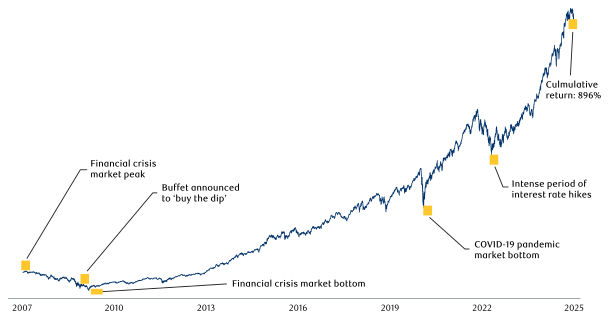
Source: RBC Global Asset Management, Bloomberg, Morningstar. S&P 500 Total Return Index in CAD. Cumulative return from October 16, 2008 to May 30, 2025. An investment cannot be made directly into an index. The graph does not reflect transaction costs, investment management fees or taxes. If such costs and fees were reflected, returns would be lower. Past performance is not a guarantee of future results.
The phrase "buy low, sell high" is often repeated but rarely understood. Buffett’s approach shows us what it looks like in practice. Buying low doesn’t mean timing the exact bottom of the market – no one, not even Buffett, can do that. Instead, it means buying when others are fearful, even if prices continue to fall in the short term.
In reality, buying low often feels uncomfortable. You invest, and the market continues to drop. You invest again, and it might fall even further. But as a long-term investor, your time horizon allows you to ride out the turbulence and eventually sell high. That’s the Buffett way.
As Buffett transitions into retirement at the age of 95, his legacy as an investor, teacher and advocate for rational decision-making remains unmatched. For investors today, his words are a timeless reminder to stay focused, stay disciplined, and above all, stay invested.
When markets move, you may wonder if it’s time to buy or sell investments. Investor bias can impact these decisions. A financial advisor can help you make choices that will support your long-term goals and plans.