
Pay yourself first. You may have heard this widely used personal finance mantra before, and for good reason. This strategy involves saving a portion of your income on a regular, automatic basis. Integrating a “self-payment routine” into your budget, alongside your other necessary expenses – like your phone bill or buying groceries – can set you up for success.
1
It’s easier to save. Investing regularly allows you to invest smaller amounts on an ongoing basis. This can be easier on the wallet compared to the alternative of coming up with a large lump-sum investment at some later date.2
It’s easier to invest. Many people feel nervous about putting larger sums of money into the markets. With regular investing, you don’t hit those same psychological barriers. You just keep going, no matter what’s happening in the markets – knowing your results will tend to average out over the long run.1
Make saving automatic. Set up a pre-authorized contribution, or ‘PAC.’ For example, you can set up a transfer of funds from your paycheck to your investment account. You set the amount that you can afford. By making the contributions automatic, you’ll soon find you don’t miss those few dollars each month. But you’ll really start to see the savings add up over time.2
Invest regularly, no matter what’s going on in the markets. This is called dollar cost averaging, or ‘DCA.’ With DCA, you invest a smaller amount at a regular pace – whether markets are up or down.If markets are dropping, you’ll be able to buy more units of an investment at its lower price. If markets are heading up to a new high, you’ll buy fewer units – but new highs are not uncommon and over time markets tend to have more positive years than negative.
It all averages out over the long term.
Of course, you do have the option to invest larger ‘lump sums.’ Here you invest less often but put more money in the market when you do. This raises the question: Which is better for you, DCA or lump-sum investing?
Ask yourself:
- Is it easier for you to save a little every month? Or is it easier to find a larger sum to invest less often – such as a yearly bonus at work or your tax refund? You’ll likely get further, faster, if you have a plan you can stick with.
- How long before you’ll need the money you’re investing? Are you years away from retiring or buying a home, for example, or will you need to start withdrawals soon? Lump-sum investing may reward long-term investors more.
- What’s your tolerance for risk? Will larger losses on paper rattle your nerves? Investing smaller sums through DCA will likely lessen the impact of any negative market shifts.
A strategy for all types of markets
Consider this: if markets start to drop, how will you feel about investing a lump-sum of cash? Will you worry that markets will plunge further – causing you to delay investing? Worry can keep investors on the sidelines – sometimes for an extended period of time.
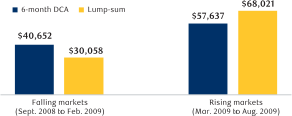
Let’s compare the experience of a DCA investor to a lump-sum investor during the Global Financial Crisis of 2008-2009, when markets dropped sharply. We’ll look at two six-month periods: one where markets were falling and one where markets were rising.
For the chart below, we make the following assumptions:
- Each investor has $50,000 in cash to invest.
- The DCA investor deployed the cash across six equal monthly installments.
- The lump-sum investor deployed the entire sum of cash on the first day of the same six-month period.
DCA vs. lump-sum investing under different market conditions
Source: RBC GAM, Morningstar. S&P/TSX Composite Index (TR). Value reflects ending value after noted 6-month period. An investment cannot be made directly in an index. Graph does not reflect transaction costs, investment management fees or taxes. If such costs and fees were reflected, returns would be lower. Past performance is not a guarantee of future results. Values and performance are in CAD.
- During falling markets. The DCA approach protected the investor’s holdings relative to the lump-sum investment.
- During rising markets. The lump-sum investor outperformed in the six months following the market trough. However, making a lump-sum investment when markets have plunged would have been extremely unnerving. Particularly when you consider the economic outlook at the time. Despite trailing the lump-sum results, the DCA investor still captured solid returns, with a more measured approach.
What does the long-term data tell us?
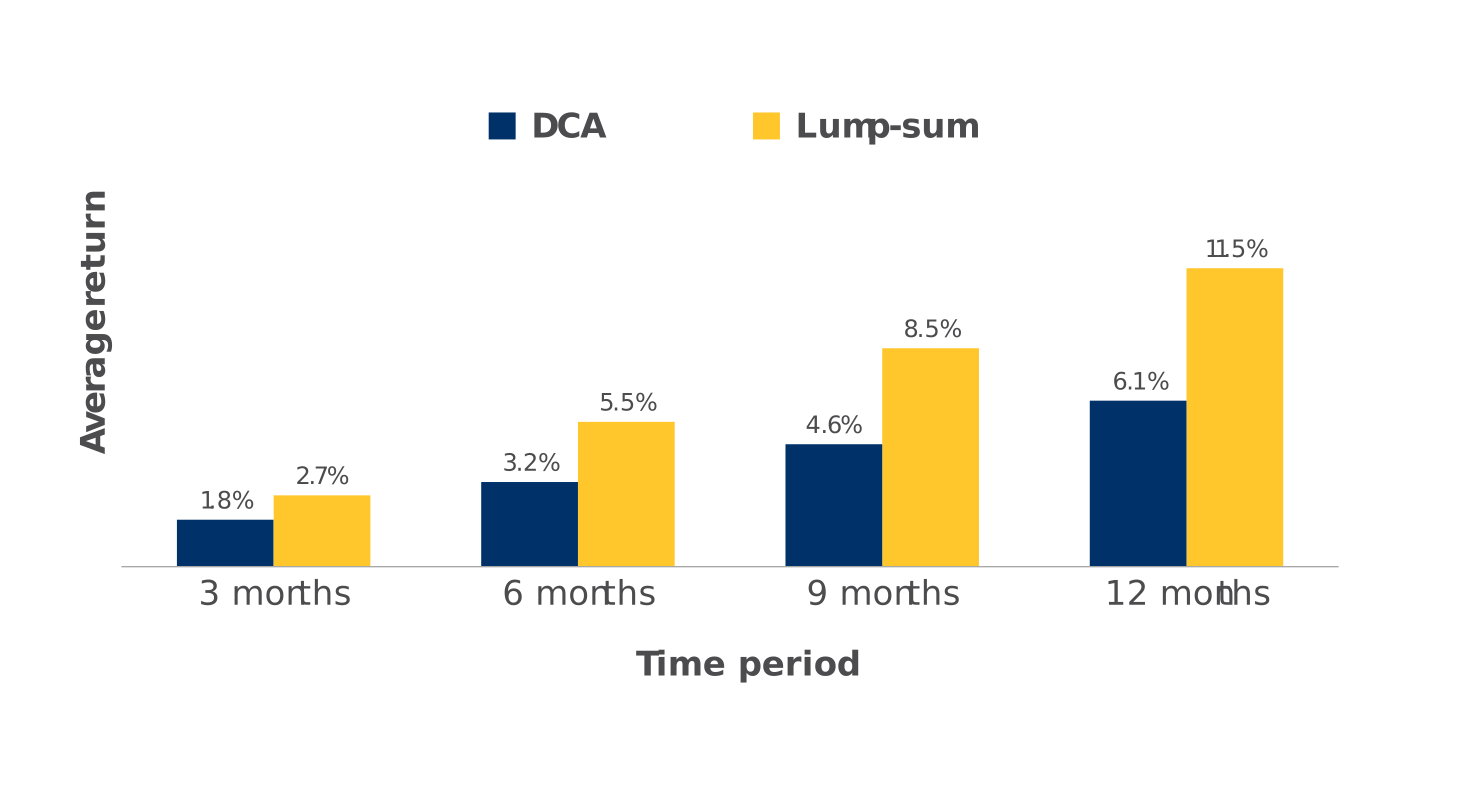
The chart below compares the outcomes of entering the market with a lump-sum investment to DCA strategies that invest cash. It shows the average returns of both strategies over monthly time periods ranging from three to 12 months in each consecutive year since 1990.
The results are based on:
- A one-time, lump-sum investment of $10,000 made at the beginning of each time period.
- DCA installments of $10,000, spread out evenly each month over the course of each time period.
The lump-sum strategy came out on top in each time period. This is because markets generally rise over time. So the DCA investor often bought in at higher average prices.
Lump-sum vs. various DCA strategies
Source: RBC GAM, Morningstar. S&P/TSX Composite Index. Reflects the average returns of both a lump-sum investment and dollar-cost averaging strategy over 3-, 6-, 9-, and 12-month periods between January 1, 1990 and June 30, 2025. Returns are rolling with a 1-month step. Returns are total returns, including dividends. An investment cannot be made directly in an index. Graph does not reflect transaction costs, investment management fees or taxes. If such costs and fees were reflected, returns would be lower. Past performance is not a guarantee of future results. Values and performance are in CAD.
While this data is helpful, many of us do not make decisions based solely on stats and figures. When it comes to investing, our emotions can also affect our decisions. Investing a large amount of money all at once can be intimidating. Fear of market volatility, potential losses, or bad timing can cause hesitation or second-guessing. Emotional biases, such as loss aversion (the fear of losing money), can lead investors to delay or avoid making the investment altogether.
| DCA | Lump-sum investing |
|
|
Saving and investing regularly can help smooth out the highs and lows when you invest. And if you’re new to investing, it can make it easier to get started. If you don't have a lot of money right now to invest, that's okay. You can start small and keep adding over time, which can still lead to growth.
However, if you have a lump sum to invest, this can work out well over longer periods of time. Before you invest, talk to a financial advisor to work out a plan that’s best for your unique situation.